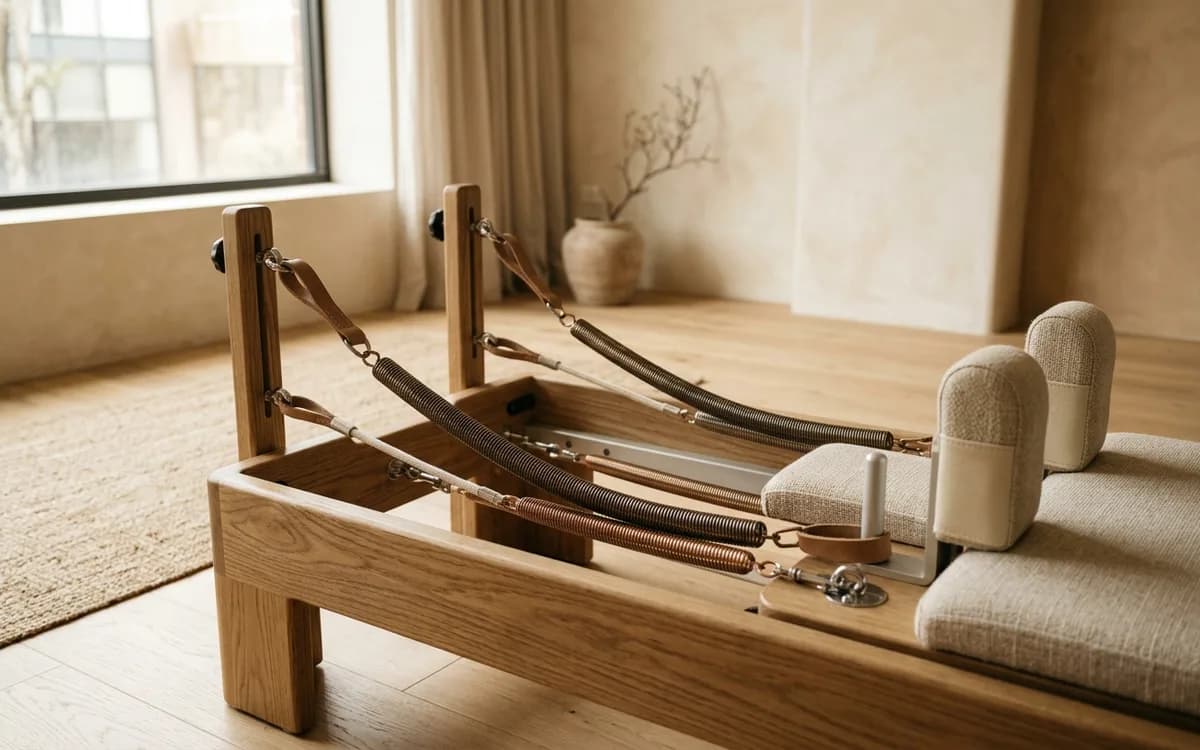
If you have lower-back pain and are considering reformer Pilates, discuss suitable exercises and class formats with a healthcare professional first. Explain that UPREFORMER classes use recorded video instruction, with no instructor in the room.
Pain has more than one possible cause
The cause of lower-back pain varies and is not always obvious. Pain alone does not show that weak muscles or posture are responsible. The NHS describes possible causes and when to seek medical help.
Movement may be part of recovery, with exercise and intensity adapted to the individual. A physiotherapist can assess your condition and help you plan activity, as Guy's and St Thomas' NHS Foundation Trust explains.
What a video can show
A video demonstrates movements and reformer settings. It cannot assess your pain or check how you perform an exercise. Ask your healthcare professional whether independent exercise with a recording is appropriate or whether you need individual supervision.
An exercise described as gentle on the back is not necessarily suitable for you. Movements and settings vary within a class.
Before your next session
If you have a diagnosed disc herniation or a recent injury, discuss returning to exercise with a doctor or physiotherapist. Stop if pain gets worse and seek advice. Sudden severe pain or rapidly worsening symptoms need urgent medical assessment, according to the NHS.